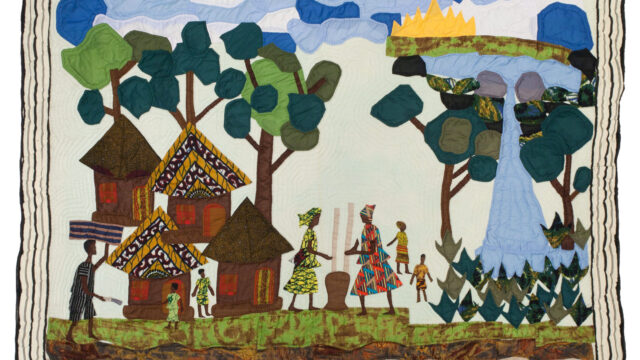
Quilting in West Africa: How the enduring tradition of Liberian women shaped diplomatic relations
RegisterWhat can a quilt tell us about diplomacy?
Liberian quilting was introduced in the 1820s by Black women migrating from the U.S., utilizing local materials such as country cotton and kapok that suited the tropical climate. The quilts incorporated imported fabrics and symbols like the coffee tree and the Liberian flag.
Since 19th-century examples are scarce, knowledge relies on documents like letters and newspapers, which mention quilts displayed at national fairs and notable works like Martha Ann Ricks’ 1892 quilt given to Queen Victoria. This tradition continued among settlers’ descendants into the 1980s, with hand-quilting on wooden frames supported by American-sponsored cooperatives. Throughout this history, quilts acted as diplomatic artifacts connecting Liberia to the Atlantic world.
Join Zingha Foma, a PhD candidate at NYU studying the 16th-18th-century textile trade and fashion on the Gold Coast, to explore this history of Liberian quilting. She is also the current curatorial fellow at GWU’s Textile Museum.
Following Zingha Foma’s presentation, we invite you to view our Among the Powers of the Earth exhibit featuring stories related to Liberia’s independence.
Please RSVP by November 2, 2026. For further information or if you require reasonable accommodations to attend the event, please contact us at NMAD-programs@state.gov.
Arrival Instructions
NMAD is located at 330 21st St NW, Washington, DC 20006 (the glass building on 21st Street between D Street and C Street, NW).
Please arrive between 12:00 and 12:10 pm to allow ample time for security processing. A valid REAL photo ID is required for entry (e.g. passport, U.S. driver’s license).
About the Speaker
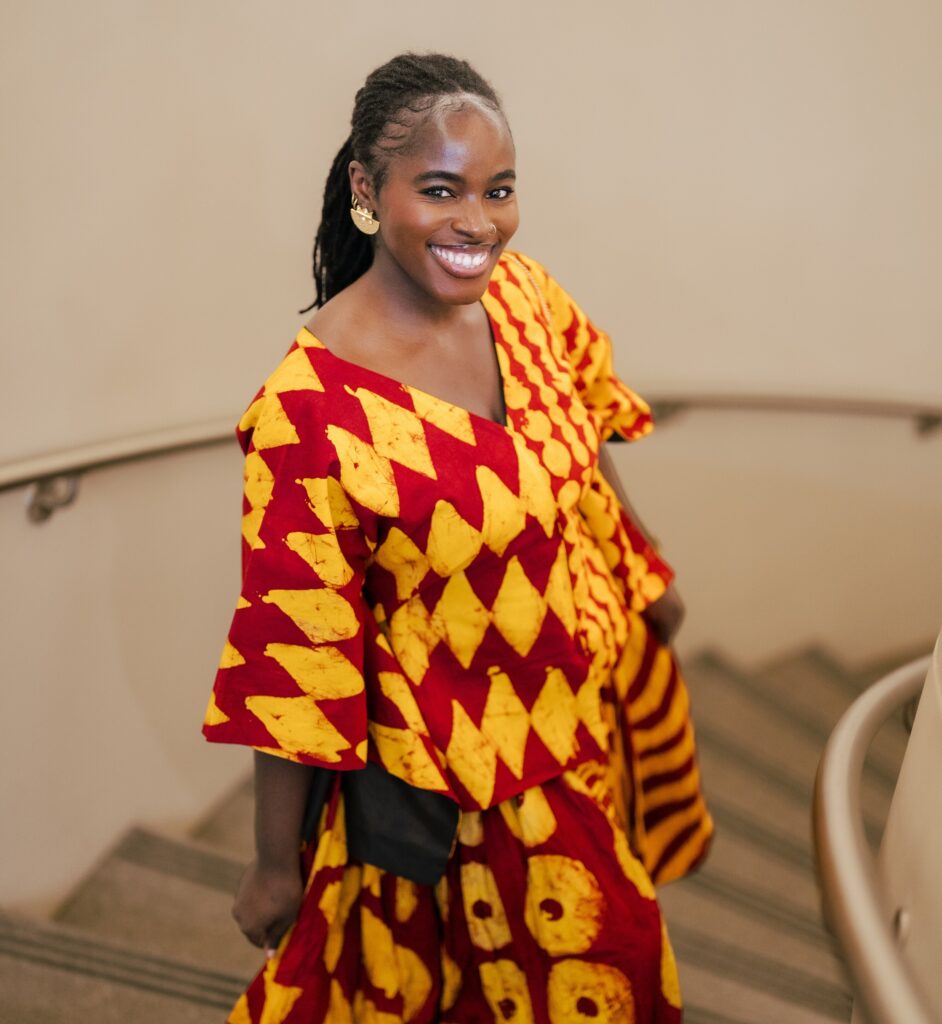
Zingha Foma joined the George Washington University Museum and the Textile Museum as a Curatorial Fellow in 2026, where she researches and catalogs the Museum’s African textile holdings. She is a PhD candidate in African History at New York University, where she also earned her Master of Philosophy. Her dissertation, “Fashion on the Gold Coast: Textile Production, Trade Networks, and Social Transformation from the Sixteenth to the Eighteenth Centuries,” draws on archival research at The National Archives, Kew, and ethnographic fieldwork with weavers and resist-dye artisans across Ghana, Senegal, Cameroon, and Nigeria.
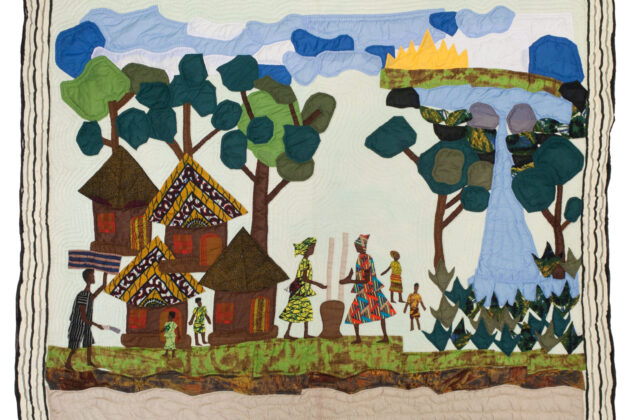
FROM THE COLLECTION
Handmade Liberian Quilt