About NMAD
The National Museum of American Diplomacy tells the story of the history, practice, and challenges of American diplomacy. Through exhibitions and programs, we inspire the American public to discover diplomacy and how it impacts their lives every day. No other museum brings diplomatic history to the forefront in its exhibits, and no other institution is solely dedicated to collecting items of diplomacy. Through this work, the museum aims to create a more collaborative world.
Where We Are
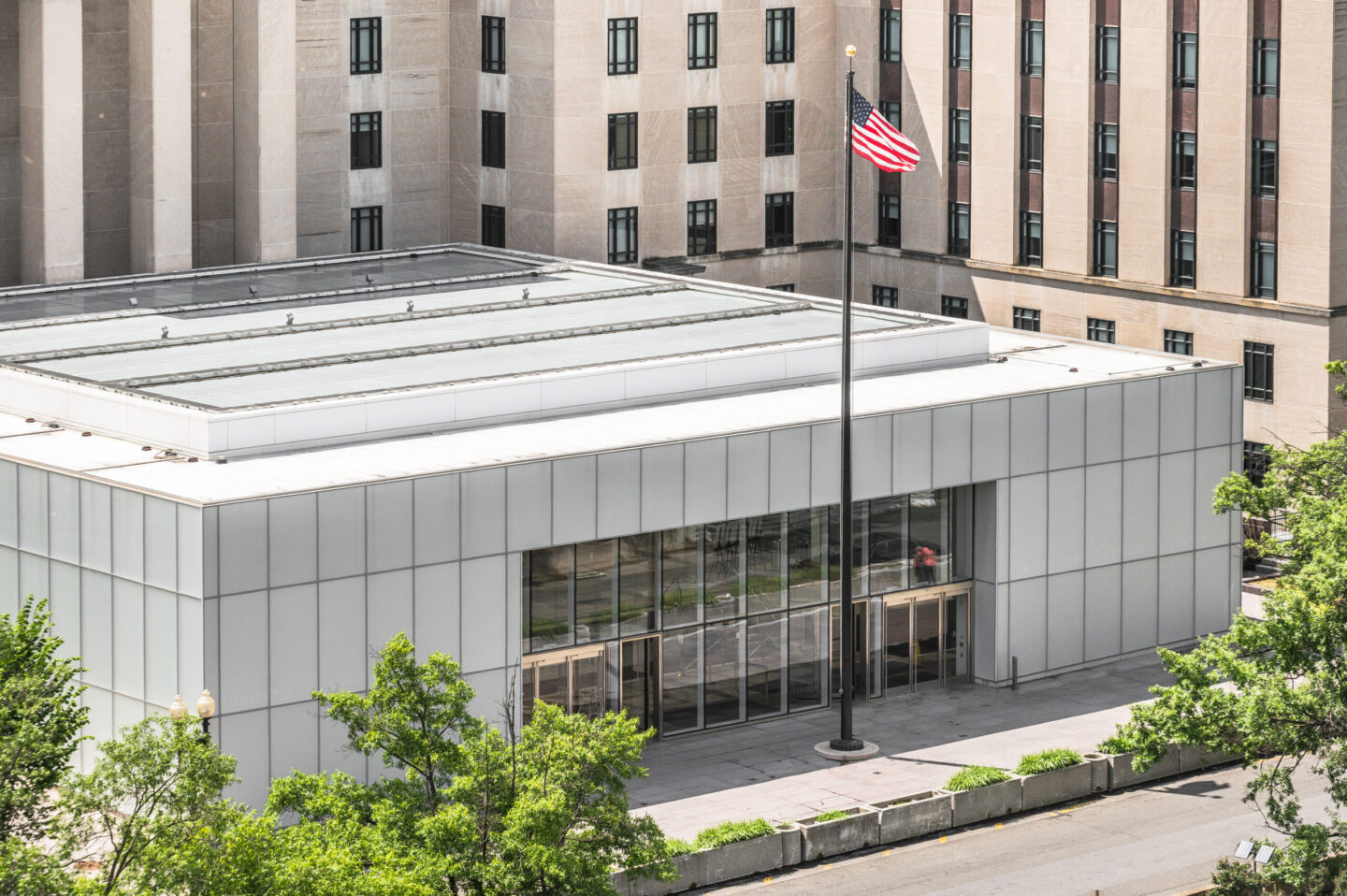
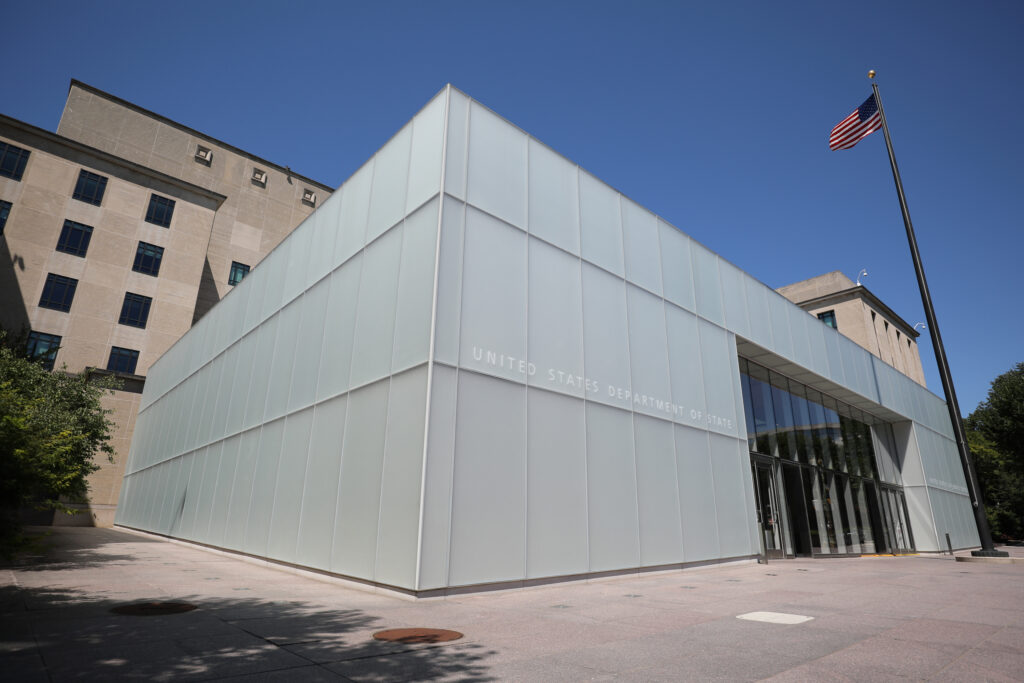
We are located at the 21st Street entrance of the Harry S Truman Building, the home of the U.S. Department of State. Our 20,000-square-foot glass pavilion currently houses multiple exhibits and hosts various events throughout the year.
History
In 2000, Secretary Madeleine Albright approved a plan proposed by the Foreign Affairs Museum Council (FAMC), a nonprofit organization of former ambassadors, members of Congress, and foreign affairs leaders, for a museum exploring American diplomacy.
In 2014, Secretaries Kissinger, Baker, Powell, Albright, Clinton, and Kerry broke ground to start construction on the contemporary two-level glass and steel pavilion, which complements the Art Moderne style of the original 1939 War Department. The pavilion was made possible by the generous donations of individuals, corporations, and third parties who contributed $50 million for its completion in the first fundraising phase.
In October 2015, the museum received the “Signature Segment” of the Berlin Wall, now housed in the lower-level. Construction of the pavilion was completed in January 2017, paving the way for the completion of exhibit design and fabrication. The National Museum of American Diplomacy opened to the public on October 1, 2026. Museum visitors can reserve tickets by visiting diplomacy.state.gov/visiting.
Architecture & Exhibition Design
The National Museum of American Diplomacy brings its mission to life through architecture and exhibitions designed to make the history, practice, and challenges of diplomacy accessible to all. Its 20,000‑square‑foot glass‑and‑steel pavilion, designed by Beyer Blinder Belle Architects & Planners, opens the museum to the city with a bright, transparent entry that reflects diplomacy’s commitment to openness. The pavilion aligns with the historic Truman Building and draws daylight deep inside, creating a welcoming public space where visitors can begin to discover how diplomacy shapes their lives.
Inside, C&G Partners designed exhibitions that turn diplomacy into an active, immersive experience. Sculptural forms inspired by treaties, visas, maps, and passports shape the galleries, while interactive media connects people, places, and events to show diplomacy as a living global network. A large, animated world map and a dynamic field of national flags help visitors visualize the evolving reach of U.S. diplomatic relationships and the challenges diplomats navigate every day.
Together, the architecture and exhibition design intentionally reinforce NMAD’s mission by creating an open, human‑centered environment that brings diplomatic history to the forefront, deepens public understanding, and inspires a more collaborative world.