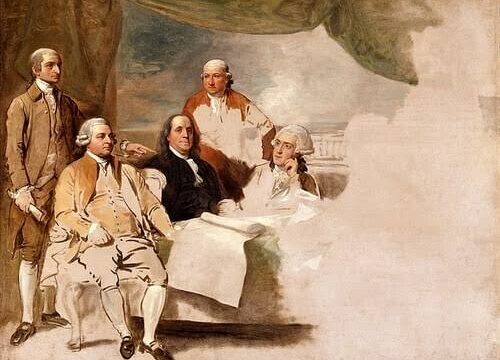
Treaty of Paris
You’ve won the war. Now, how do you negotiate the peace?
In 1783, the United States faced this challenge as American diplomats negotiated the Treaty of Paris, formally ending the Revolutionary War. The negotiations marked a pivotal moment in the nation’s history and in the development of American diplomacy.
John Adams, Benjamin Franklin, Henry Laurens, and John Jay represented the United States in the negotiations, working to secure the nation’s independence and establish its place among the world’s powers. Their efforts demonstrated the importance of diplomacy in shaping the future of the new nation.
Join NMAD historian Dr. Alison Mann to explore John Adams’s contributions to the diplomatic team.
Following Dr. Mann’s presentation, we invite you to view our Among the Powers of the Earth exhibit featuring the signature page of the Treaty of Paris.
Please RSVP by October 15, 2026. For further information or if you require reasonable accommodations to attend the event, please contact us at nmad-programs@state.gov.
Registration for this event has closed.
Arrival Instructions
NMAD is located at 330 21st St NW, Washington, DC 20006, in the Harry S Truman Building. Visitors must enter at the 21st Street entrance to the U.S. Department of State (the glass building on 21st Street between D Street and C Street, NW).
Please arrive by 12:00 pm to allow ample time for security processing. A government-issued REAL ID is required for entry (e.g. passport, U.S. driver’s license). Check out our FAQs to prepare for you visit.
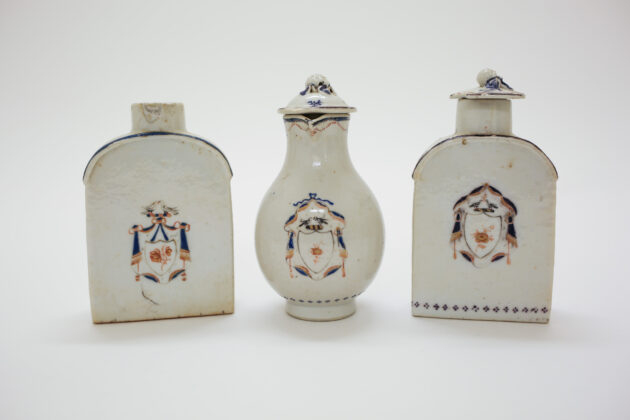
FROM THE COLLECTION
Chinese Export Porcelain Teaware