Chinese Export Porcelain Teaware
China Late 1700s
After winning independence, the United States needed trading relationships to help grow its economy. Great Britain remained a global power at sea and barred Americans from trading in some places, such as the West Indies in the Caribbean.
Trading in the Pacific—including China—was one of the few frontiers open for American merchants. In 1784, the first American trading ship, the Empress of China, arrived in Canton (today Guangzhou), China.
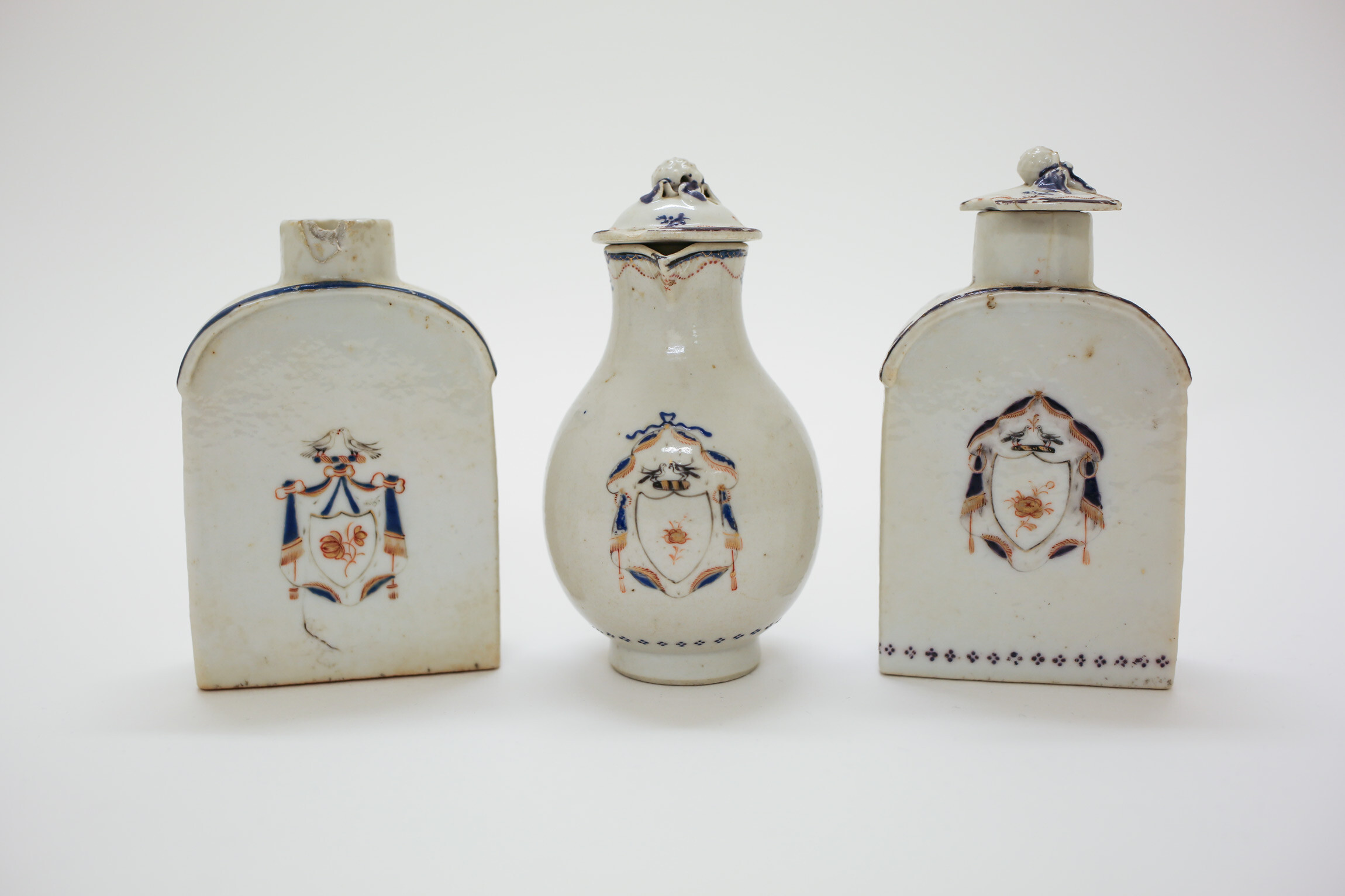
Porcelain items were a significant export for China and a valued commodity in the United States. In the late 1700s, Chinese export porcelain pieces like these tea caddies and cream jug were in high demand among wealthy Americans.
This image is in the public domain and no permission is required to use it. Please credit the National Museum of American Diplomacy as the original source, and provide a link back to the item page where possible.
Most of our items are donations, and we cannot always confirm the copyright or trademark status of photographs, prints, drawings, and other artistic works that may be depicted in these images.
Please contact us at NMAD@state.gov for any permissions or usage questions.
MLA Format
Chinese Export Porcelain Teaware. Late 1700s. National Museum of American Diplomacy, https://diplomacy.state.gov/items/chinese-teaware
Chicago Format
Chinese Export Porcelain Teaware, Late 1700s, National Museum of American Diplomacy, Washington, DC, https://diplomacy.state.gov/items/chinese-teaware
APA Format
(Late 1700s). Chinese Export Porcelain Teaware [Object]. National Museum of American Diplomacy, Washington, D.C., United States. https://diplomacy.state.gov/items/chinese-teaware