


Video
What Is Foreign Policy?
Foreign policy is how a country uses different strategies to guide its relationships with other countries and international organizations. This means that foreign policy is…
Also available in Español
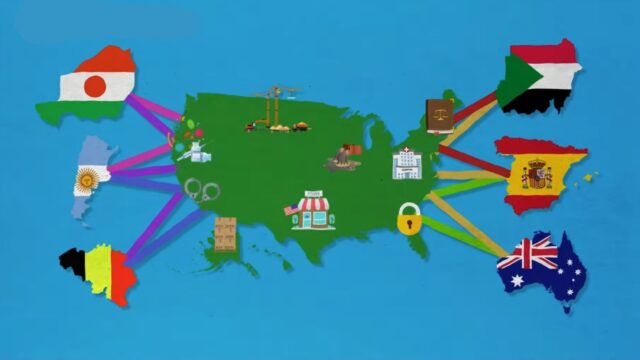
In its most fundamental form, diplomacy is about relationships.
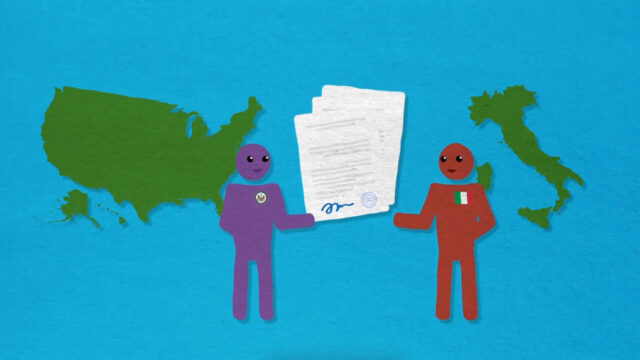
The U.S. has diplomatic relations with almost 200 countries around the world. Bilateral, or between two countries, relations around the world are the foundation of U.S. diplomacy. But why do U.S. diplomats build and maintain relationships with people, countries, and international organizations?
Each relationship is unique and plays an important role in advancing America’s interests and values abroad.
In this lesson, students will identify the difference between bilateral and multilateral diplomatic relations. They will also explore the patterns of U.S. diplomatic interactions in order to analyze why the U.S. has diplomatic relationships with countries and organizations.
Video
Foreign policy is how a country uses different strategies to guide its relationships with other countries and international organizations. This means that foreign policy is…
Also available in Español
Activity
At its core, diplomacy is about communication, compromise, and finding solutions everyone can agree on. And on a global scale, it’s what keeps countries talking…
Video
Treaties and alliances are two ways the United States formalizes agreements with other countries and international organizations. Treaties are written agreements between nations or between…
Also available in Español