
Simulation
Barbary Pirates Hostage Crisis: Negotiating Tribute and Trade
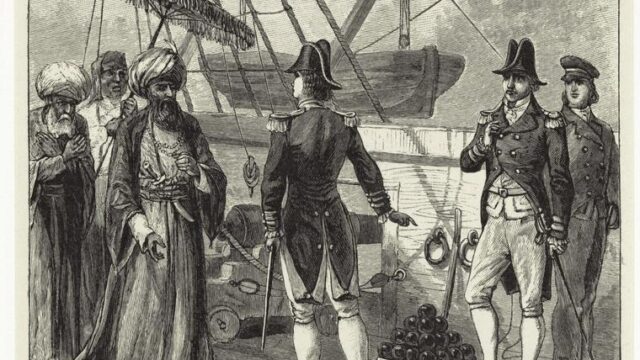
In 1793, Algerine corsairs captured 11 more American ships and 100 citizens, prompting a commercial and humanitarian crisis that could not be ignored.

It’s 1787. The Revolutionary War is over, but victory has left the young United States with debts, shaky trade agreements, and a currency no one trusts. How does this new nation provide for itself?
In this lesson, students will explore the economic challenges and opportunities facing the United States in the years immediately following independence. Through discussion and analysis, they will examine issues such as war debt, trade relationships, currency instability, and the balance between state and national economic power. Building on their understanding, students will then be challenged to create an economic proposal that fosters prosperity, international trade, maintains independence, and establishes the U.S. as a credible force in global trade
Through this activity, students will develop a deeper understanding of the economic challenges faced by the fledgling nation and the foundational decisions that shaped its future.
Simulation
In 1793, Algerine corsairs captured 11 more American ships and 100 citizens, prompting a commercial and humanitarian crisis that could not be ignored.
Video
Diplomats around the world work to advance their own national interests, including improving their nation’s economies, ensuring market access, and promoting businesses. Economic diplomacy is…
Also available in Español
Activity
Students will analyze the Declaration of Independence through a foreign policy lens to uncover its global message, tone, and strategic intent.