Lesson Plan
Building Bridges: U.S. Bilateral and Multilateral Relations
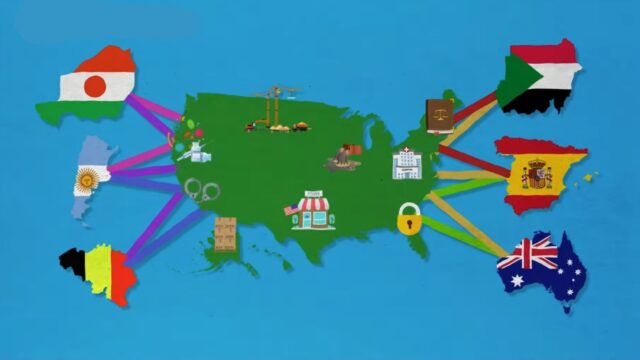
In this lesson, students will explore the reasons for bilateral and multilateral diplomatic relations and their importance in advancing America's interests abroad.
Browse available resources in
Showing 1–10 of 43 results
Lesson Plan
In this lesson, students will explore the reasons for bilateral and multilateral diplomatic relations and their importance in advancing America's interests abroad.
Activity
In this activity, students will analyze a global issue and formulate a diplomatic strategy to address the issue.
Lesson Plan
In this lesson, students explore the role of the Office of the Geographer and Global Issues (GGI) within the U.S. State Department, gaining insight into how geography is applied to address global challenges.
Lesson Plan
Through the treaty writing activity, students will have a deeper appreciation for the complexity of diplomacy and the critical importance of communication, negotiation, and compromise in shaping the course of history.
Activity
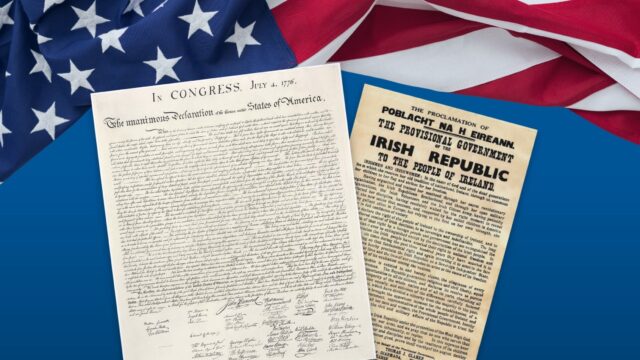
Students will compare international Declarations of Independence with the U.S. Declaration, noting similarities and differences in content and style.
Lesson Plan
In this lesson, students will craft and propose an economic plan they believe will best support the growth of the newly independent U.S.
Lesson Plan
In this lesson, students will design a proposal aimed at convincing foreign investors to trade with the newly independent U.S.
Activity
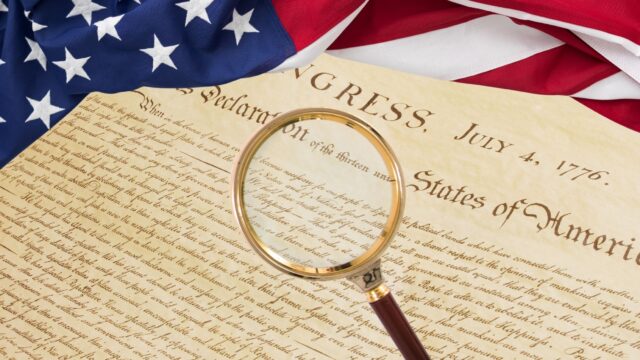
Students will analyze the Declaration of Independence through a foreign policy lens to uncover its global message, tone, and strategic intent.
Activity
Jumpstart class with NMAD’s bell ringer collection, offering quick prompts for reflection, inquiry, and discussion of America’s 250-year diplomatic journey.
Lesson Plan
This lesson engages students in a critical analysis of U.S.-Vietnam relations, exploring changes over time as well as diplomacy's key role in post-conflict reconciliation.